The YO! Sushi conveyor belt is a Japanese kaiten system in which dishes travel around the restaurant on a belt and diners pick whichever plate they like.
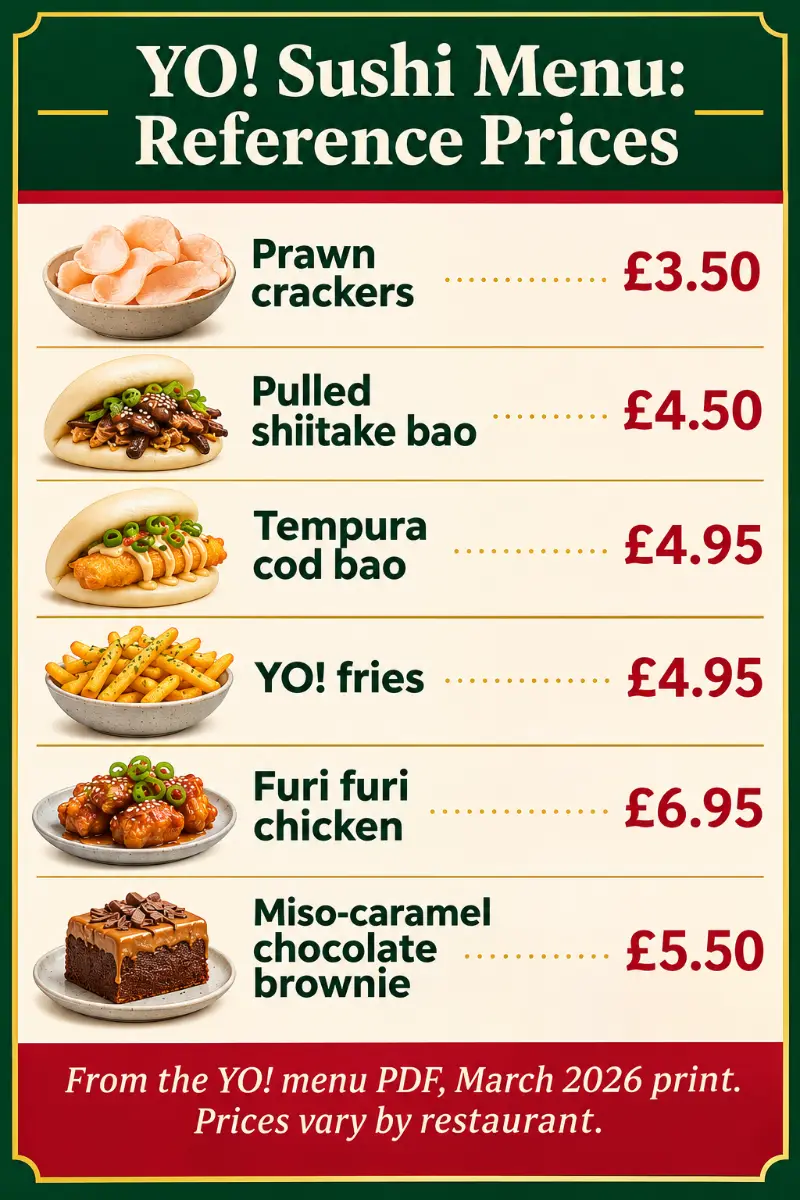
Quick answer
- Kaiten: dishes circle on a conveyor belt and you pick any dish.
- Food is prepared in a theatre-style kitchen in view of customers.
- First restaurant: Soho, London, January 1997, founded by Simon Woodroffe.
- Wikipedia says the menu includes 19 vegan items.
YO! Sushi conveyor belt: how it works
According to Wikipedia, YO! Sushi specialises in the Japanese kaiten method. Sushi and other Japanese cooked foods are prepared in a theatre-style kitchen in view of diners and placed on a belt that carries them around the restaurant. Diners pick the dishes they want as they pass.
History
The first YO! Sushi restaurant opened in Soho, London, in January 1997, founded by the British entrepreneur Simon Woodroffe. Wikipedia reports more than seventy restaurants by June 2014 and says 19 restaurants were set to close in 2020, and that Zensho Holdings owns the brand. It gives no current restaurant count. The YO! Sushi homepage in 2026 does not mention the belt, so check your branch to see whether it runs one.
Tips for belt dining
- Ask your restaurant how the plates are priced or counted, as the homepage does not state prices.
- Check calories and allergens: the site links to an allergen and nutrition policy.
- For the current menu see YO! Sushi beef menu: new dishes and calories and YO! Sushi menu and prices UK.
More YO! Sushi and sushi guides
- YO! Sushi menu and prices UK
- YO! Sushi beef menu: new dishes and calories
- Sushi and Asian restaurant menu prices UK
What kaiten means
Kaiten is the Japanese term for a conveyor belt sushi restaurant, where plates travel past each seat and diners pick what they want. The idea is popular because it lets you see the food before you choose and keeps service fast. YO! Sushi brought the format to the UK when it opened in Soho in 1997 and built its brand around it.
How belt dining usually works
- Sit at a seat along the belt and watch the plates pass.
- Take the plates you want; colours or plate types commonly indicate price bands in belt restaurants, but check the legend at your restaurant because the YO! Sushi website does not publish one.
- Ask staff for hot dishes or items not on the belt.
- At the end, plates are counted to calculate the bill.
Questions to ask at the restaurant
| Question | Why |
|---|---|
| Is there a belt at this branch? | The 2026 homepage does not mention it |
| How are plates priced? | No prices are published online |
| Which dishes are vegan? | Wikipedia reports 19 vegan items |
For the current menu see YO! Sushi menu and prices UK and YO! Sushi beef menu: new dishes and calories.
The history of conveyor belt sushi
The conveyor belt format is a Japanese invention intended to serve sushi quickly and reduce staffing needs, and it spread because customers like seeing the food before choosing it. When YO! Sushi opened in Soho in January 1997, it brought that format to a British audience and paired it with a theatre-style kitchen where chefs prepare dishes in view. Wikipedia says the chain had more than seventy restaurants by June 2014, though it also notes closures in 2020, so the estate has changed over time.
Who belt dining suits
| Diner | Why it works |
|---|---|
| First-time sushi eaters | You can see the dish before you pick it |
| Groups with mixed tastes | Everyone picks their own plates |
| Fast lunch visitors | No waiting for a kitchen order for cold dishes |
| Vegetarians and vegans | Wikipedia reports 19 vegan items; check labels |
Etiquette and tips
- Take plates you intend to eat; do not return plates to the belt.
- Check the plate legend or ask staff about pricing.
- Order hot items separately from the kitchen if the belt does not carry them.
- Share the soy sauce and ginger politely if sitting close to others.
Glossary
| Term | Meaning |
|---|---|
| Kaiten | Conveyor belt sushi format |
| Theatre kitchen | Kitchen visible to diners |
| Nigiri | Topping on rice |
| Maki | Rolled sushi |
If you are new to belt dining, think of it as a self-service tasting menu: you choose what you like as it passes. The skill is in pacing yourself, trying a mix of cold and hot dishes and keeping track of what you have taken. If you are unsure about the pricing system, ask a team member at the start of the meal, because the YO! Sushi website does not publish plate prices.
Key takeaways
- Kaiten means conveyor belt sushi.
- YO! Sushi opened in Soho in January 1997.
- Wikipedia reports 19 vegan menu items.
Is belt dining good value?
Value depends on how you eat. Belt dining encourages you to try more dishes, which can lead to ordering more than planned. Counting plates as you go helps keep the total predictable. If you are cost-conscious, set a target number of plates before you start, and choose a mix of lighter and heavier dishes so you feel full without over-ordering.
Because YO! Sushi does not publish plate prices on its homepage, ask the team how the bill is calculated and what each plate type costs at your restaurant.
Summary: YO Sushi conveyor belt
In short, YO Sushi conveyor belt details can change, so confirm them at your restaurant before you order. This YO Sushi conveyor belt guide lists dated sources so you can judge how current each figure is. If you are comparing YO Sushi conveyor belt across chains, use our hub pages for like-for-like context. We review this YO Sushi conveyor belt page when official sources change. Bookmark this YO Sushi conveyor belt page and check the last-reviewed date at the top. For any YO Sushi conveyor belt question not answered here, the official site is the final authority. Our YO Sushi conveyor belt notes are written to be easy to scan and easy to verify. Use this YO Sushi conveyor belt summary alongside the official menu before you decide.
Frequently asked questions
What is a kaiten sushi belt?
When did YO! Sushi open?
Does every YO! Sushi have a conveyor belt?
Does YO! Sushi have vegan dishes?
Sources and method
Facts on this page come from the sources below, checked on 3 November 2026. Where a source did not state a year or a branch, we say so rather than guess.
MenusHub is not affiliated with YO! Sushi. Menus, offers and prices change. See our Disclaimer and Editorial Policy.